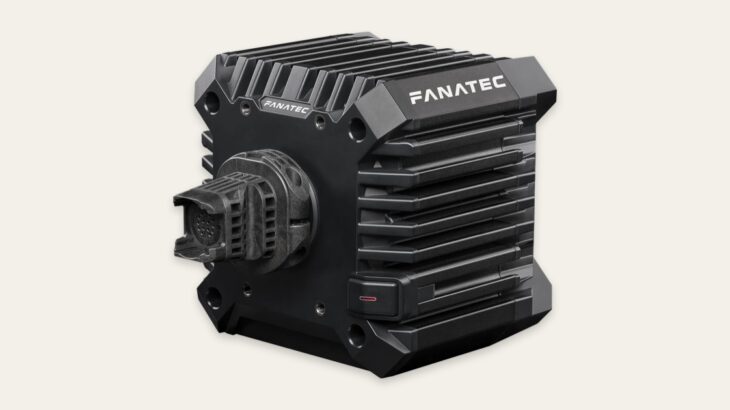
My conclusion is simple: as of 2026, the Fanatec CSL DD is the leading entry-level direct-drive wheel base for PC sim racers. At roughly ¥47,000 for the base, you can pair it with a separately sold wheel rim (from around ¥10,000) and CSL Pedals (around ¥10,000) to build a DD setup for just under ¥70,000. As a PC-focused version without the PS5 authentication chip, you will need the DD Pro if you want to use PS5. But if you are PC-only, the biggest appeal is getting a feel that is “almost identical” to the related DD Pro for ¥15,000 less.
In this article, I consolidate what has been covered across 37 Picar Channel videos on the CSL DD. It is primarily for intermediate users looking to step up from belt- or gear-driven wheels to direct drive on PC, covering torque, feel, comparisons with a ¥400,000 Simucube setup, and the upgrade path.
- 1. The verdict in 30 seconds
- 2. What Is the Fanatec CSL DD? The Heart of the “Direct-Drive Wheel Revolution”
- 3. 5 N·m / 8 N·m: This Torque Is “More Than Enough”
- 4. The Moment I Thought, “Does This Feel the Same as the DD Pro on PC?”
- 5. Real-World Feel: Consolidating the Experience From 37 Videos
- 6. Pricing and Upgrade Path
- 7. Who It Is—and Is Not—for
- 8. Related Videos
- 9. Frequently Asked Questions
- 10. Read Next
The verdict in 30 seconds
The conclusion drawn from 37 videos is that the Fanatec CSL DD is the right entry point into direct drive for PC sim racers. It is one of those rare pieces of equipment that truly fits the description, “Ginza high-end sushi at conveyor-belt sushi prices.” Its 5/8 N·m of torque is practically more than enough; on PC, it feels “almost identical” to the DD Pro; and it can even match a ¥400,000 Simucube setup for naturalness in certain situations. If you do not use PS5, you fundamentally do not need to look any further.
What Is the Fanatec CSL DD? The Heart of the “Direct-Drive Wheel Revolution”
The CSL DD is the wheel base Fanatec launched with the proposition of “direct drive in the ¥50,000 range,” changing the assumptions of the sim-racing wheel market. I have described its arrival as a “revolution.”
To explore the wider range of options, also see the Fanatec ClubSport DD / DD+ guide: 12 N·m vs. 18 N·m and the Fanatec CSL Elite review: the wheel base has been superseded, but its load-cell pedals are still among the best.
Until now, sim-racing wheels using direct drive were extremely expensive because of their performance. With high-end models like the ones I normally use, the motor alone can cost ¥400,000, and products approaching ¥500,000 with a wheel included are not unusual. Even affordable direct-drive products had previously started at around ¥160,000. … But this CSL DD Pro arrived at roughly ¥90,000 as a set. It means direct-drive quality that had only been available in high-end products could be had for around half the price—or even less. To put it another way, it is like getting high-end sushi in Ginza at conveyor-belt sushi prices.
— From Picar Channel, “The one wheel setup I can simply tell you to buy”
“Ginza high-end sushi at conveyor-belt sushi prices” is one of my signature Picar Channel phrases, succinctly expressing the scale of the impact the CSL DD—and its PS5-compatible counterpart, the DD Pro—had on the market.
Core specifications
| Item | Details |
|---|---|
| Brand | Fanatec |
| Series | CSL (consumer level) |
| Drive system | Direct drive |
| Standard peak torque | 5 N·m |
| With Boost Kit | 8 N·m |
| Wheel base price | Approx. ¥47,000 |
| Recommended setup (base + rim + pedals) | Approx. ¥68,000 |
| Supported platforms | PC (Xbox with a compatible wheel rim) / not compatible with PS5 (DD Pro required for PS5) |
| Compatibility | Fanatec ecosystem (wheel rims, pedals, shifters, handbrakes) |
5 N·m / 8 N·m: This Torque Is “More Than Enough”
The CSL DD delivers 5 N·m as standard and 8 N·m with the separately sold Boost Kit. That may look entry-level among DD wheel bases on paper, but my consistent view is that it is “more than enough” in real use.
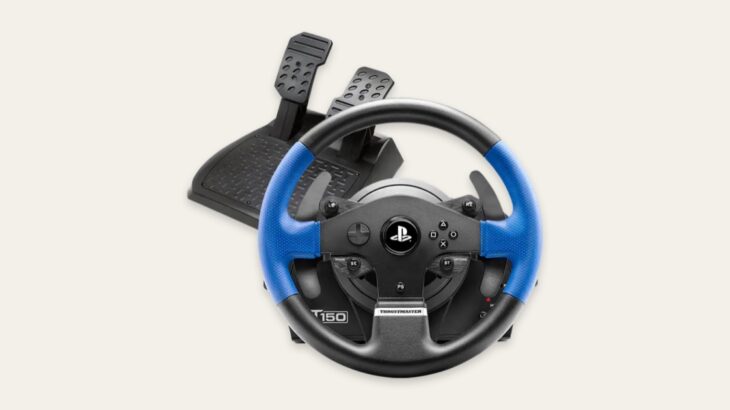
The CSL DD’s standard torque is 5 N·m. With the optional Boost Kit power supply, it can be raised to 8 N·m. That is still a very high figure compared with conventional belt-driven wheels. Logitech G29/G920: approximately 2.1–2.2 N·m / Thrustmaster T300RS: approximately 3.6–3.9 N·m / Thrustmaster T500RS: approximately 4.4 N·m / Fanatec CSW V2: approximately 7.1 N·m. From my experience, even when I use a Simucube 2 Sport, at approximately 17 N·m, I find that around 7 N·m—and sometimes as little as 5 N·m—is sufficient while actually driving. With a real power-steering-equipped car, you would rarely need as much as 5 N·m of force.
— From Picar Channel, “A high-performance, low-cost wheel that could become the standard”
In other words, even in an environment capable of 17–25 N·m with higher-end equipment, I often use the 5–8 N·m range in actual driving. The CSL DD’s 5/8 N·m is not a limitation where you constantly hit a settings ceiling; it is a practical choice that covers the usable range.
The Moment I Thought, “Does This Feel the Same as the DD Pro on PC?”
The CSL DD and DD Pro have almost the same internal design, with a price difference of around ¥15,000. The difference is whether the PS5 authentication chip is present. When I drove both on PC, the difference in feel was surprisingly small.
Swapping from the DD Pro to the CSL DD was extremely easy. I loosened the three screws securing the base, disconnected the cables, and fitted the replacement. The swap was finished in no time. … As soon as I started driving with the CSL DD, I felt that it was almost unchanged from the DD Pro. The steering weight, the way understeer and oversteer come through, the feel of riding a kerb—everything was very similar to the DD Pro.
— From Picar Channel, “In-depth test of the latest DD Pro, CSL DD, DD1, and PS4 setups”
That video reaches the following conclusion:
Based on these results, I concluded that “the DD Pro and CSL DD are almost the same thing as long as they are used connected to a PC.” If you only enjoy simulators on PC, the CSL DD will be enough. If you also want to play games on PS5, or expect to play GT7 in the future, it makes sense to choose the DD Pro while accounting for the roughly ¥15,000 price difference.
— From the same video
In short, whether you use PS5 is the dividing line between the CSL DD and DD Pro. It is not a performance difference.
Real-World Feel: Consolidating the Experience From 37 Videos
Torque response and surface-detail resolution
In feel terms, the CSL DD puts you into a world where you do not want to return to belt- or gear-driven wheels. The difference is also clear in viewer reports of switching to it.
Wheel (steering controller): Fanatec CSL DD (DD Pro). They had previously used a Thrustmaster T300RS and had just switched to a Fanatec CSL DD. Because a DD wheel drives the steering directly from the motor, feedback from the road comes through with exceptional realism. Tamapocchi also felt the benefit firsthand, saying, “After switching to DD, it became easier to understand things like bumps in the road, and my driving time increased by 1.5 to 2 times.”
— From Picar Channel, “What wheels and pedals do the fast drivers use? The results of my research”
The specific episode of driving time increasing by 1.5–2 times neatly conveys the CSL DD’s experiential value. The quality of force feedback that makes you want to keep driving for long sessions is an important evaluation criterion that cannot be expressed in specification numbers.
Against a ¥400,000 Simucube Setup: “The CSL DD Feels More Natural and Easier to Drive”
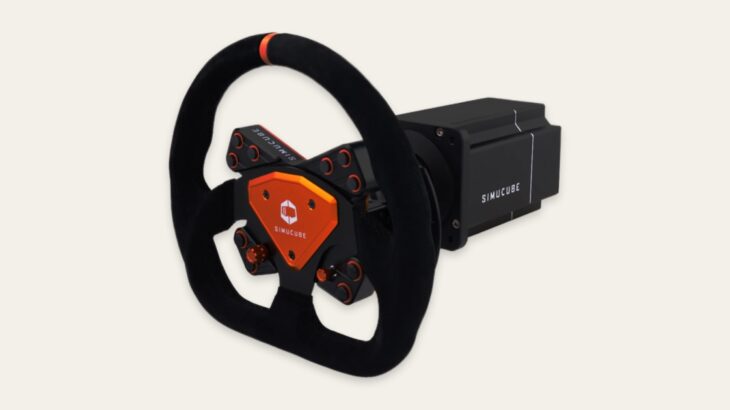
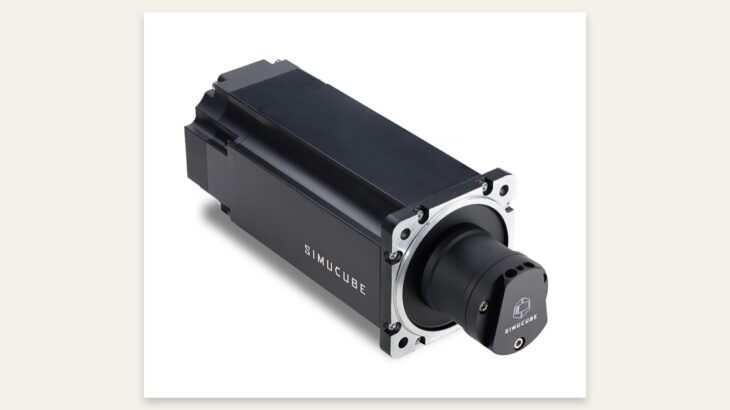
One particularly revealing test of the CSL DD’s potential is a video where I directly compared a Simucube setup (approximately ¥400,000) with the CSL DD (approximately ¥50,000).
Simucube uses an open-source system called “OpenSimwheel,” and its defining characteristic is that the feel changes substantially with the profile—your force-feedback settings. … When I took hold of the wheel, I was first struck by how quickly the torque built and by the way the steering seemed to tighten up. That comes from Simucube’s excellent motor performance. But with the initial profile, I had the impression that it portrayed road-surface gaps on a larger scale. It felt as if it was picking up road information beyond what was necessary and feeding it back excessively. There were moments when the CSL DD felt more natural and easier to drive.
— From Picar Channel, “No-holds-barred wheel test: ¥50,000 vs. ¥400,000”
This is an important observation: price does not necessarily equal subjective feel. Simucube exceeds the CSL DD in configuration freedom and maximum torque, but there can even be situations where the CSL DD is preferable for ease of driving at default settings.
Simucube’s greatest strength is that you can set the wheel extremely heavy. For sim racers who want to reproduce perfectly the feeling of race cars with very heavy steering, such as F3 and F2 cars, Simucube is one of a kind and will be an essential choice. On the other hand, if you enjoy most other sims, including Assetto Corsa, the Fanatec CSL DD will be more than satisfying. Its value for money is extraordinary, and it is genuinely wonderful to get this level of direct-drive experience at this price.
— From the same video
In other words: Simucube is for those who want to reproduce the extremely heavy steering of F3/F2-class cars, while the CSL DD is for those who want to enjoy most sims naturally and enjoyably.
iRacing / ACC / rFactor 2: Established in Serious PC Sims
The CSL DD is especially well suited to serious PC simulators, and I have repeatedly listed it as my first recommendation for PC users.
For those who want to get serious about sim racing on PC: For people looking to enjoy serious sim racing in PC simulators such as iRacing, Assetto Corsa Competizione, and rFactor 2, the CSL DD is my top recommendation. CSL DD base: approximately ¥47,000; steering wheel: from approximately ¥10,000; CSL Pedals without a clutch: approximately ¥10,000. Combined, these give you a setup approaching professional specifications for around ¥68,000.
— From Picar Channel, “New DD Pro launch: review roundup”
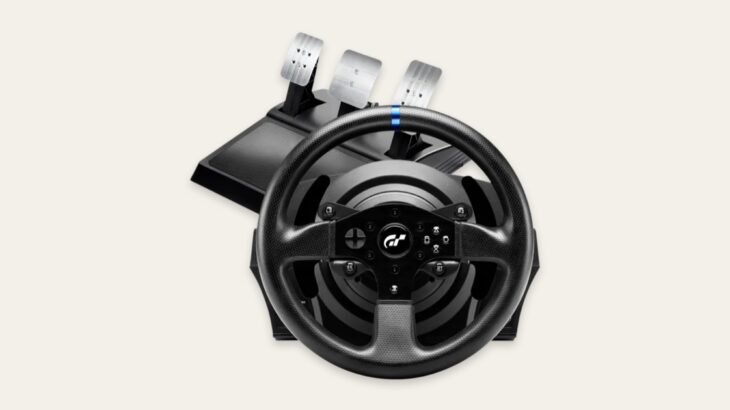
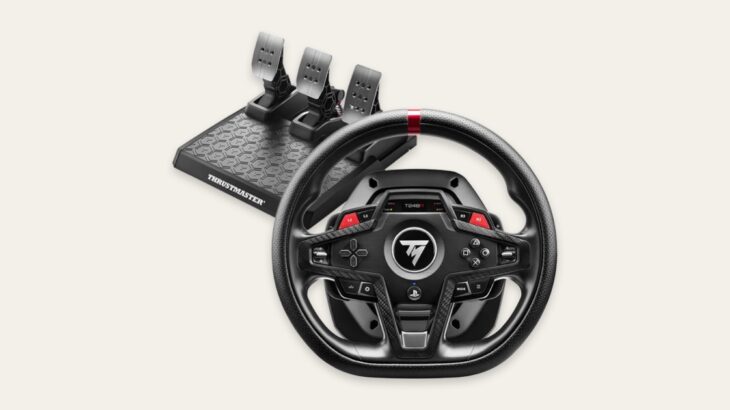
A setup “approaching professional specifications for ¥68,000” was a price point the wheel market had long failed to deliver. At a similar price, when compared with the T248 (approximately ¥55,000), I have also repeatedly found that the direct-drive CSL DD wins decisively over the belt/gear-driven T248 on the fundamental quality of its feel.
Freedom From Thermal Fade
One issue users have faced with belt-driven wheels, especially long-running models, is thermal fade: weakening FFB after extended driving as motor temperature rises. The CSL DD’s direct-drive system frees you from this problem.
If you plan to enjoy sim racing on PC or Xbox and your budget allows, I strongly recommend buying the Fanatec CSL DD. You do not have to worry about thermal fade, the T300RS’s greatest weakness, and the overwhelming feel delivered by direct drive offers more than enough value to make up for the price difference.
— From Picar Channel, “A high-performance, low-cost wheel that could become the standard”
For users focused on online leagues or endurance racing, where long sessions are expected, this becomes a decisive difference.
Pricing and Upgrade Path
The CSL DD cannot be used on its own: you also need a wheel rim and pedals. Being able to build the setup in stages is a key strength of the Fanatec ecosystem.
Minimum Setup (Approximately ¥68,000)
| Component | Approximate price |
|---|---|
| CSL DD wheel base | Approx. ¥47,000 |
| Steering wheel rim (such as CSL Steering Wheel) | From approx. ¥10,000 |
| CSL Pedals (without clutch) | Approx. ¥10,000 |
| Total | Approx. ¥68,000 |
Premium Bundle / Looking Ahead to V3 Pedals
Premium bundle and pedal choice: There is also the CSL DD Pro Premium Bundle. It adds a clutch pedal to the basic set and changes the brake pedal from a potentiometer design to a pressure-sensitive load-cell type. A pressure-sensitive brake detects the pressure you apply rather than simply the amount of pedal travel, enabling more delicate braking closer to a real car. This Premium Bundle cost ¥132,000 at the time of filming, but I believe the smart choice is to buy the basic set first, then add a clutch pedal or higher-performance pedals such as the ClubSport V3 as needed.
— From Picar Channel, “The one wheel setup I can simply tell you to buy”
In other words, the practical investment pattern is to start with the basic set and move to ClubSport V3 pedals when you want more. Because you can keep using the CSL DD base, a later ¥40,000-range investment in V3 pedals can bring you into a feel territory close to higher-tier wheel-base setups such as the DD Extreme.
Who It Is—and Is Not—for
✅ Recommended for
- Anyone looking to upgrade from a belt- or gear-driven wheel such as the T300RS, G29, or G923 to DD on PC
- Anyone wanting to enjoy serious PC sims such as iRacing, ACC, rFactor 2, and Automobilista 2
- Anyone frustrated by thermal fade during extended driving
- Anyone who wants a complete DD setup for ¥60,000–¥70,000
- Anyone who wants to upgrade in stages to V3 pedals or higher-end wheel rims later
- Anyone who feels Simucube-level high-end hardware is overkill
❌ Not recommended for
- PS5 users → the DD Pro is essential (the CSL DD does not support PS5)
- Anyone seeking to replicate the extremely heavy steering of F3/F2-class cars → Simucube-type hardware
- Anyone who wants the absolute top-tier experience immediately → DD Extreme / DD2
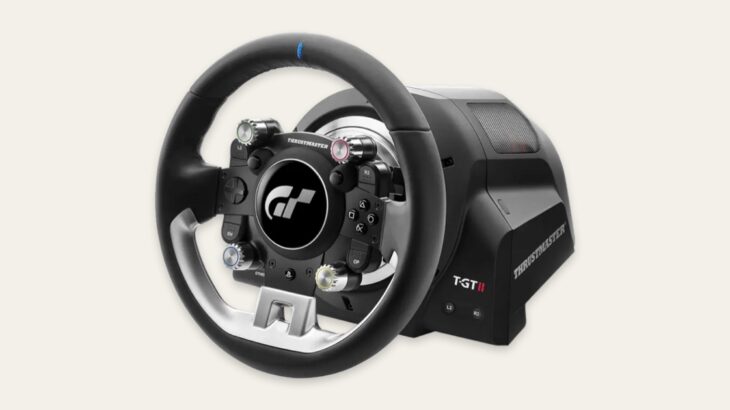
- Anyone who dislikes buying the base, rim, and pedals separately → a complete package such as the T300RS / T-GT II
Related Videos
- The one wheel setup I can simply tell you to buy
- A high-performance, low-cost wheel that could become the standard
- No-holds-barred wheel test: ¥50,000 vs. ¥400,000
- In-depth test of the latest DD Pro, CSL DD, DD1, and PS4 setups
- New DD Pro launch: review roundup
Frequently Asked Questions
Q1. Should I choose the CSL DD or DD Pro?
A. Choose the DD Pro if you use PS5; the CSL DD is enough for PC only. When I compared both directly on PC, I found their feel to be “almost identical,” so the roughly ¥15,000 difference is essentially the cost of the PS5 authentication chip.
Q2. Do I need the Boost Kit to get 8 N·m?
A. It is not essential. I have said that even on a Simucube 2 Sport rated at 17 N·m, I usually use 5–8 N·m in actual driving, so 5 N·m is fully practical. Consider it if you want to reproduce the heavy steering of F3/F2-class cars.
Q3. What do I need for the minimum setup?
A. The three essentials are the wheel base (approximately ¥47,000), a steering wheel rim (from approximately ¥10,000), and CSL Pedals (approximately ¥10,000), for approximately ¥68,000 total. That completes a setup approaching professional specifications. The clutch pedal is sold separately.
Q4. How does it compare with ¥400,000-plus high-end hardware such as Simucube?
A. Simucube is ahead in maximum torque, configuration freedom, and reproducing F3/F2-class steering. But I have found that the CSL DD can be superior in naturalness and ease of driving at default settings. My conclusion is that the CSL DD is enough for anyone other than those seriously seeking to reproduce F3/F2.
Q5. Does it solve thermal fade?
A. Yes. The weakening of FFB during long sessions that occurs with belt-driven wheels such as the T300RS does not occur with the direct-drive CSL DD. This is a decisive advantage for users who enjoy long online races.