To cut to the chase, as of 2026, the Fanatec CSL Elite has two sides: its wheel base is older-generation hardware that has given way to the CSL DD generation, while the CSL Elite Pedals LC (load-cell version) remain a standard upgrade pedal set for advanced drivers. The wheel base itself (belt drive with gear drive elements) lost much of its reason to exist with the arrival of the CSL DD (from around ¥47,000). The pedals, however, are still highly regarded and continue to be used as a go-to piece of equipment shared by fast sim racers.
In this article, I’ll organize what I’ve said across 19 Picar Channel videos about the CSL Elite. It is aimed mainly at intermediate and advanced drivers who already own a T300RS, G29, or similar setup and are looking for an entry point into the Fanatec ecosystem. I’ll cover the wheel base, the pedals, and examples of how advanced drivers actually use them.
- 1. My verdict in 30 seconds
- 2. What is the Fanatec CSL Elite? Fanatec’s flagship of the belt-drive era
- 3. Assessment as a wheel base: FFB limitations in GT Sport
- 4. The pedals are where the CSL Elite shines: the power of Pedals LC load-cell braking
- 5. Real-world use and feel: organizing impressions from 19 videos
- 6. The CSL Elite wheel base: its value on the used market
- 7. Where it sits against the competition
- 8. Who it is—and is not—for
- 9. Related videos
- 10. Frequently asked questions
- 11. Read next
My verdict in 30 seconds
My conclusion from 19 Picar Channel videos is that the Fanatec CSL Elite is a product with two distinct sides: the wheel base is older-generation gear that has made way for the CSL DD generation, but the LC pedals remain a staple for advanced drivers. I do not recommend buying the wheel base new, but a “pedals-only upgrade” that combines CSL Elite Pedals LC with a wheel base from another brand, such as the T300RS, G29, or G923, remains a valid strategy in 2026. The value of getting into load-cell braking for around ¥30,000 has not faded.
What is the Fanatec CSL Elite? Fanatec’s flagship of the belt-drive era
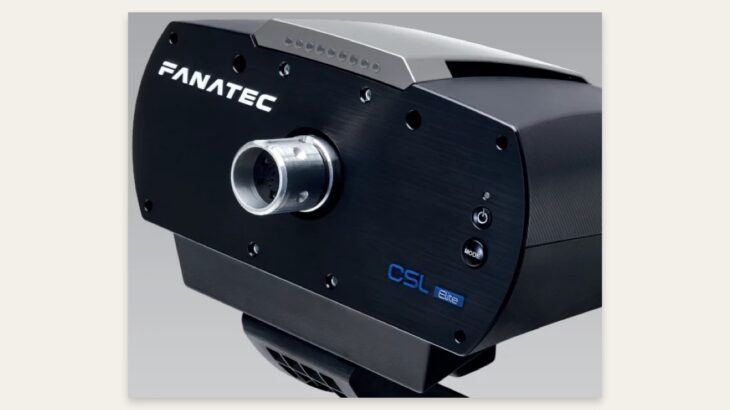
The CSL Elite is Fanatec’s representative belt-drive racing wheel from before the company introduced the CSL DD, a direct drive unit.
To broaden the comparison, also see Sim Racing Pedals Compared 2026: ClubSport V3 / T-LCM / MOZA SR-P / Heusinkveld Sprint Across Six Videos and Heusinkveld Sprint / Ultimate+ Review: Five Videos Testing Their True Value as iRacing-Focused Sim Pedals.
Fanatec also had products such as the CSL Elite, but belt drive systems, which transmit motor power through a belt, and gear-drive systems, which transmit it through gears, were still the mainstream. Compared with direct drive, they inevitably gave up a step in terms of feel. What matters here, though, is the news that an affordable direct drive racing wheel is arriving from Fanatec.
— From Picar Channel’s “A high-performance, low-cost racing wheel that could become the new standard”
The assessment of the CSL Elite wheel base is that it “inevitably gave up a step in terms of feel compared with direct drive.” With the arrival of the CSL DD (from around ¥47,000), the objective reality is that its role in the market as a wheel base is coming to an end.
Core specifications
| Item | Details |
|---|---|
| Brand | Fanatec |
| Series | CSL Elite (PS4-compatible version) |
| Drive system | Belt drive (with some gear drive elements) |
| Included pedals | Standard pedals (optionally upgradeable to CSL Elite Pedals LC with a load-cell kit) |
| Successor | CSL DD (direct drive system, from around ¥47,000) |
| Supported platforms | PlayStation 4 / PC |
Assessment as a wheel base: FFB limitations in GT Sport
The CSL Elite wheel base’s biggest strengths are its high-quality hardware finish and rigidity. At the same time, insufficient FFB tuning has been clearly identified as a weakness.
Fanatec CSL Elite: Its hardware quality and the performance of its pedal unit are overwhelmingly at the top level. However, in GT Sport, I got the impression that inadequate FFB tuning prevented it from fully realizing that potential. It delivered a realistic feel in certain situations, but the overall amount of information and vagueness around center remained issues.
— From Picar Channel’s “G923 / T300RS / CSL Elite: three-way comparison”
“Top-tier hardware quality, but insufficient FFB tuning” is the core duality of the CSL Elite. Compared with the similarly priced T300RS, with its belt drive and tuned FFB, there are situations in which the CSL Elite is somewhat less satisfying as a wheel base.
The pedals are where the CSL Elite shines: the power of Pedals LC load-cell braking
What is most highly rated about the CSL Elite is actually not the wheel base but the pedal unit—especially the “CSL Elite Pedals LC” paired with the load-cell upgrade kit.
The Fanatec CSL Elite pedals can be described as “overwhelmingly good” among the three models. They have a feel and rigidity close to a real car, with extremely high controllability. Even without optional parts, their performance stands out, and considered on their own, the pedals deliver the best experience.
— From the same video
The verdict that they offer “the best experience when considered as pedals alone” supports the usage pattern I see among advanced drivers: move on from the wheel base, but keep the pedals. In fact, many higher-level sim racers pair CSL Elite Pedals LC with wheel bases from other brands, such as the T300RS.
Real-world use and feel: organizing impressions from 19 videos
A standard pedal set used by fast sim racers
In a video where I investigated the sim setups used by “the fast guys,” CSL Elite Pedals LC appeared as a common piece of equipment used by several top players.
Pedals: Fanatec CSL Elite Pedals LC. These had previously been the pedals included with the T300RS, but they were replaced with load-cell Fanatec CSL Elite Pedals LC. Rather than controlling braking by pedal travel, load-cell pedals control it by pedal force, allowing braking with a sensation closer to a real car. Tamapocchi seemed pleased with the adjustment range as well, saying that the brake felt good and could still be made two or three steps firmer. He also expressed the view that there is no need to replace the pedals included with the T300 if they do not suffer from heat fade, which reinforced for me how important it is to get the most from the equipment you have.
— From Picar Channel’s “What racing wheels and pedals do the fast guys use? Here’s what I found”
The broad adjustment range behind the comment, “the brake felt good and could still be made two or three steps firmer,” is a strength unique to load-cell pedals. There is also the satisfying process of refining them further toward your own preferences the longer you use them.
They can become even better with load-cell modifications
The same investigation also introduced an example of an advanced driver using modified CSL Elite Pedals LC.
Pedals: Fanatec CSL Elite Pedals LC (modified). Like Tamapocchi, Smoky-kun uses Fanatec CSL Elite Pedals LC, but he has gone further with his own modifications. He replaced part of the rubber in the load-cell section with a spring. Once that spring is fully compressed, it locks out and the rubber takes effect from that point onward. This was adjusted so that “the spring engages at about half the gauge, and full braking comes in after pressing a little further,” which he said made braking much easier.
— From the same video
A setup in which “the spring engages at about half the gauge” gets close to the braking feel of a real racing car. The CSL Elite Pedals LC have the flexibility to accommodate this kind of modification. That is a different kind of enjoyment from the latest racing wheels that are simply used straight out of the box.
The load-cell upgrade changes braking to force-based control
The load-cell conversion for CSL Elite Pedals LC changes the fundamentals of brake control.
Assuming CSL Elite pedals with the load cell cost around ¥30,000—¥10,000 for the pedals themselves plus ¥20,000 for the load-cell kit—you could put together a direct drive full setup for a total of around ¥110,000. Compared with conventional direct drive products, that is exceptionally affordable.
— From Picar Channel’s “A high-performance, low-cost racing wheel that could become the new standard”
In other words, converting with “CSL Elite Pedals (¥10,000) + load-cell kit (¥20,000)” for a total of ¥30,000 functions as an entry point to a staged upgrade path toward even higher-end pedals such as the Heusinkveld Sprint (around ¥70,000).
The CSL Elite wheel base: its value on the used market
Although the wheel base has made way for the CSL DD generation, it still retains some presence on the used market. One viable approach is to use it as a base unit, taking advantage of Fanatec ecosystem rim compatibility, then gradually upgrade the pedals, shifter, and rims.
However, if you are considering a new purchase, jumping directly to a CSL DD (from around ¥47,000, PC only) or DD Pro (from around ¥90,000, PS5 compatible) is overwhelmingly the smarter choice. As of 2026, there is almost no reason to invest in a new CSL Elite wheel base.
Where it sits against the competition
| Product | Positioning | 2026 recommendation |
|---|---|---|
| CSL Elite wheel base (belt drive) | Fanatec’s representative older-generation model | Consider used only; not recommended new |
| CSL Elite Pedals LC (load cell) | A standard pedal set for fast sim racers | Strongly recommended (can be paired with wheel bases from other brands) |
| CSL DD (PC-only direct drive) | Current successor to the CSL Elite | Top choice for PC drivers |
| DD Pro (PS5-compatible direct drive) | PS5-compatible successor to the CSL Elite | Top choice for PS5 drivers |
Who it is—and is not—for
✅ Recommended for (especially Pedals LC)
- Drivers with a T300RS, G29, G923, or similar wheel who want to upgrade only their pedals to load-cell braking
- Those comfortable with a staged investment of CSL Elite Pedals (around ¥10,000) plus the load-cell kit (around ¥20,000)
- Intermediate to advanced drivers who want to try the pedals commonly used by fast sim racers
- Those who want to start in the ¥30,000 range while retaining a future upgrade path to Heusinkveld Sprint (around ¥70,000)
- DIY-minded drivers interested in pedal modifications, such as spring and rubber tuning
❌ Not recommended for
- Anyone planning to buy a new CSL Elite wheel base → I recommend switching to CSL DD (PC) or DD Pro (PS5)
- Those who want a complete, final-form load-cell pedal set immediately → Fanatec ClubSport V3 (around ¥64,000) or Heusinkveld Sprint (around ¥70,000)
- Those with no interest in pedal modifications
Related videos
- G923 / T300RS / CSL Elite: three-way comparison
- A high-performance, low-cost racing wheel that could become the new standard
- What racing wheels and pedals do the fast guys use? Here’s what I found
Frequently asked questions
Q1. Is the CSL Elite wheel base still worth buying?
A. I do not recommend buying it new. Fanatec now offers the CSL DD (from around ¥47,000, PC only) and DD Pro (from around ¥90,000, PS5 compatible), both of which clearly surpass it in feel. Only consider it if you can find one cheaply used—that is the realistic call.
Q2. Can CSL Elite Pedals LC be used with wheel bases from other brands, such as the T300RS or G29?
A. Connection methods can differ, but in many cases they can be used together through a PC. In fact, many of the fast sim racers I investigated use CSL Elite Pedals LC in combination with wheel bases from other brands, such as the T300RS.
Q3. Can the load-cell kit be added later?
A. Yes. You can convert the standard CSL Elite Pedals into “Pedals LC” by adding the load-cell kit (around ¥20,000). The ability to invest in stages is one of the strengths of the Fanatec ecosystem.
Q4. How do they differ from the higher-end Heusinkveld Sprint?
A. The Heusinkveld Sprint (around ¥70,000) is higher-end in rigidity, adjustment freedom, and durability. However, the price difference is around ¥40,000. A realistic path is to start with CSL Elite Pedals LC as an introduction to load-cell braking, then move to Sprint when you want more.
Q5. Are modifications difficult?
A. They are for advanced users, but not impossible. The video introduced concrete examples such as replacing part of the rubber in the load-cell section with a spring, then having the rubber take effect once the spring is fully compressed. The sim-racing community has plenty of modification information available.