My conclusion first: even in 2026, the Thrustmaster T300RS remains one of the strongest contenders for the “standard” mid-range racing wheel. It normally costs around ¥50,000 and can sometimes be found in the ¥30,000 range during sales. It combines the smooth force feedback unique to a belt-drive system with the flexibility to swap steering wheels. Even now that alternatives such as the newer T598 and the Logitech G923 are available, the T300RS continues to be chosen as a first serious racing wheel because of its balance of price and performance.
In this article, I will organize what I have said across 82 Picar Channel videos about the T300RS, focusing on the belt-drive feel, the expandability of the ecosystem, and where it stands against its rivals for readers looking for a mid-range wheel in the ¥50,000 class.
- 1. My verdict in 30 seconds
- 2. What is the Thrustmaster T300RS? The “standard” ¥50,000-class wheel
- 3. Belt-drive feel: smooth and quiet
- 4. Swappable wheels and ecosystem expandability
- 5. The pedals in practice: the advantage of three pedals with a clutch
- 6. Real-world feel: what 82 videos of experience tell me
- 7. How it feels by game: Shutokou Battle 2025 / iRacing / GT7
- 8. Comparison with rivals: Logitech G923 / Thrustmaster T150
- 9. Should you consider upgrading to the T598?
- 10. Who it is for—and who should look elsewhere
- 11. Related videos
- 12. Frequently asked questions
- 13. Read next
My verdict in 30 seconds
Based on what I have covered across 82 Picar Channel videos, the Thrustmaster T300RS is the standard ¥50,000-class wheel that can stay with you for a long time as your first serious setup. Its smooth belt-drive feel, swappable-wheel ecosystem, three-pedal layout, and PS5/PC compatibility remain a well-balanced package even in 2026, with more successors and rivals on the market. If you can get one in the ¥30,000 range during a sale, there is no reason to hesitate.
What is the Thrustmaster T300RS? The “standard” ¥50,000-class wheel
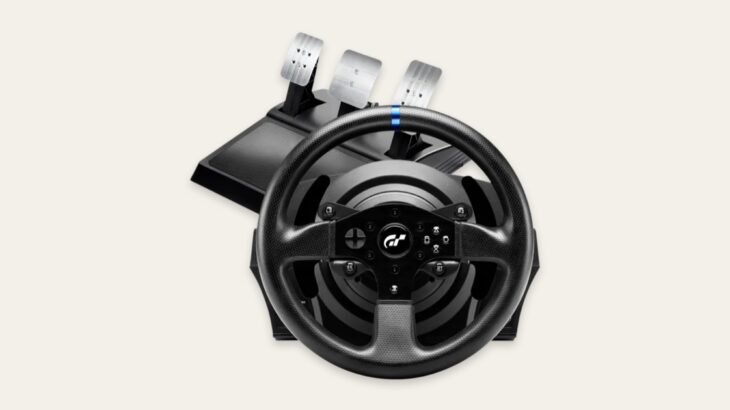
The T300RS is Thrustmaster's mid-range racing wheel, and I have consistently positioned it on Picar Channel as the standard model in the ¥50,000 class.
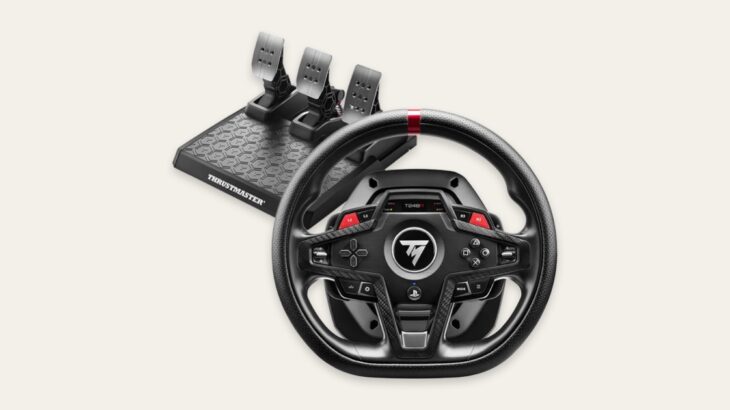
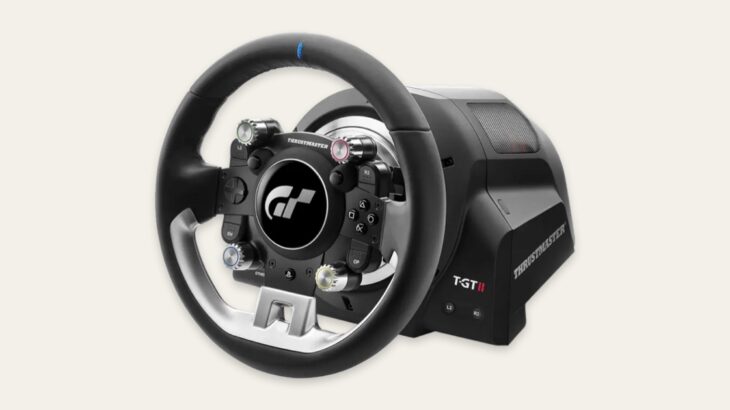
To broaden your comparison, also see my Thrustmaster T598 review: DD + high-frequency vibration, official GT7 support, and T300RS compatibility tested across 7 videos and Thrustmaster T-GT II review: the ultimate belt-drive wheel, faster than a DD1 in GT7.
For a racing wheel in the ¥50,000 class, it truly deserves to be called the standard model. Its strong force feedback, swappable steering wheel, and authentic three-pedal feel have earned support from many sim-racing users. Many people also use it with PC sims such as iRacing, so I can absolutely recommend it to anyone who wants to take simulation seriously. If it is close in price to the T150, choose the T300RS without hesitation.
— From Picar Channel, “Reviewing all 9 racing wheels compatible with Gran Turismo 7”
Key specifications
| Item | Details |
|---|---|
| Brand | Thrustmaster |
| Category | Racing wheel (complete set) |
| Drive system | Belt drive |
| FFB | Yes (strong) |
| Included pedals | Three pedals, including clutch / angle-sensing brake |
| Wheel swapping | Supported (Thrustmaster ecosystem compatible) |
| Regular price | Approximately ¥50,000 |
| Sale price | Sometimes available in the ¥30,000 range |
| Supported platforms | PlayStation 5 / PlayStation 4 / PC |
Belt-drive feel: smooth and quiet
The T300RS's defining feature is its belt-drive system. It does not have the direct metallic feel of a gear-driven wheel such as the G29; instead, its appeal is smooth, quiet FFB.
A major feature of the T300RS GT Edition is its belt-driven force feedback. Compared with gear-driven systems, it can communicate road-surface detail to the wheel more smoothly and delicately. That lets you sense the limit of tire grip and changes in the car's behavior more intuitively, helping improve driving precision.
— From Picar Channel, “7 best racing wheels for GT7 with PlayStation support”
In a video directly comparing it with the G923, I summarized the difference in character this way:
The Thrustmaster T300RS is defined by extremely smooth, natural force feedback from its belt-drive system. There is no notchiness at all in the wheel, so its feel may suit drivers who prefer smooth behavior. The T300RS ecosystem is also highly appealing for anyone who values expandability and wants to build their ideal cockpit over time by changing to different steering wheels and pedals.
— From Picar Channel, “G923 vs. T300RS: in-depth comparison”
Swappable wheels and ecosystem expandability
The T300RS is not a product that has to end as a standalone purchase. It is designed as part of the Thrustmaster ecosystem.
The T300RS is also appealing because it supports the ecosystem of interchangeable wheel rims. You can later add and customize with different types of steering wheel, including F1-style and GT-style rims, as well as higher-performance pedals and shifters. That lets you expand the system to suit your driving style and preferences.
— From Picar Channel, “G923 vs. T300RS: in-depth comparison”
Even with the successor T598 now on the market, T300RS steering wheels, pedals, and shifters can also be used with the T598, so its value as a long-term investment remains intact.
The pedals included with the T598 are compact, but T-GT II and T300RS pedals can connect directly to the T598 base without a conversion adapter. As for shifters, I have also confirmed that both lower-priced and higher-priced Thrustmaster models can connect to the T598.
— From Picar Channel, “Official GT7 support for the T598! Results of my behavior testing”
The pedals in practice: the advantage of three pedals with a clutch
The T300RS includes a three-pedal set: accelerator, brake, and clutch. The brake is angle-sensing rather than load-cell based, so it does not reach the level of higher-end load-cell pedals, but it is absolutely usable for this price class.
As I have mentioned in another video in the context of hardware modifications, the T300RS pedals also have room to improve through modding.
The pedals included with the Thrustmaster T300RS use potentiometers. Their performance is not bad, but the modifications I cover later can make them even easier to use.
— From Picar Channel, “Pedal comparison video”
Moving up to load-cell pedals such as the Heusinkveld Sprint or Fanatec V3 can be saved for the point when you genuinely want to chase faster lap times.
Real-world feel: what 82 videos of experience tell me
Why it feels “smooth and quiet”
The T300RS belt drive physically avoids the notchiness of gear drive and produces less vibration. That is the foundation of the “natural feel” assessment I have repeatedly made.
The T300RS's biggest feature is its belt-drive force feedback. While the G923 combines gears and TRUEFORCE, the T300RS transmits motor power to the wheel through a belt, creating exceptionally smooth and quiet force feedback. Wheel rotation is smooth, and information from the road reaches your hands continuously as a natural sensation.
— From Picar Channel, “G923 vs. T300RS: in-depth comparison”
The phrase “road information reaches you continuously as a natural sensation” neatly expresses the physical smoothness a belt drive provides. For many users moving up from a gear-driven G29, this uninterrupted feeling is the difference that makes it hard to go back.
Why it is popular with intermediate drivers
The T300RS has remained popular for so long not only because of performance, but also because of its balance: it is easy for intermediate drivers to live with.
T300RS GT Edition: its smooth operation makes it popular with intermediate drivers as well. In the video, I said, “I think it's good. The fact that it delivers force feedback is already more than enough.” Its belt-driven FFB can transmit road-surface detail to the wheel more smoothly and delicately than gear-driven systems. That allows you to sense tire-grip limits and changes in vehicle behavior more intuitively, improving driving precision.
— From Picar Channel, “7 best racing wheels for GT7 with PlayStation support”
That improvement in driving precision is the essential reason the T300RS is selected as a step-up wheel from beginner to intermediate level. FFB that lets you read the tire's grip limit makes practice much more productive.
Three-way comparison: G923 / T300RS / CSL Elite
The T300RS's real strengths become clearer in direct comparisons with similarly priced alternatives.
Hello everyone, Picar3 here. This time, I am bringing you an in-depth comparison of three popular racing wheels that viewers have especially requested: the Logitech G923, Thrustmaster T300RS, and Fanatec CSL Elite for PS4. I drove these PS4-compatible wheels in the popular racing simulator Gran Turismo SPORT, evaluating force feedback, pedal feel, and the communication of road information. Which wheel delivers the best GT SPORT experience? Even I found the result surprising.
— From Picar Channel, “G923 / T300RS / CSL Elite: in-depth comparison”
When three models in a similar price range have such different characters, the buying decision comes down to your priorities. My conclusion is that the T300RS is the choice that maximizes smoothness and expandability.
How it feels by game: Shutokou Battle 2025 / iRacing / GT7
Recommended hardware for Shutokou Battle 2025
For Shutokou Battle 2025, released in 2025, I used the T300RS myself.
Hello, Picar here! The new Shutokou Battle, Shutokou Battle 2025, is finally here. …When playing Shutokou Battle 2025 with a racing wheel like I do, proper settings are extremely important. If you neglect them, the game's feel changes dramatically. Using the T300RS that I use as an example, I will explain the setup in detail.
— From Picar Channel, “Shutokou Battle 2025 first play: detailed racing-wheel setup guide”
According to that video, when using the T300RS in Shutokou Battle 2025, you need to set the rotation range to 360 degrees in the Thrustmaster driver. Getting this wrong makes the car behavior feel completely different, so make this driver-side setting before adjusting anything in-game.
My assessment in iRacing
In iRacing, one of the leading serious PC sims, the T300RS is also recognized as a wheel used by many drivers. Its FFB character pairs well with iRacing's physics, and it has established itself as hardware that entry-level to intermediate users can keep using for a long time.
Comparison with rivals: Logitech G923 / Thrustmaster T150
vs. Logitech G923
The Thrustmaster T300RS is characterized by exceptionally smooth, natural force feedback from its belt-drive system. …In contrast, the G923 is defined by the fine vibration effects of TRUEFORCE and its hybrid gear-drive design. …Ultimately, choosing between the G923 and T300RS depends on what you want from a racing wheel. Choose the G923 if your top priority is the latest realistic vibration effects and immersion; choose the T300RS if you prioritize smooth control feel and high expandability.
— From Picar Channel, “G923 vs. T300RS: in-depth comparison”
On total cost, including a shifter and clutch pedal, the G923 tends to be the less expensive package.
The G923 has an advantage when you consider total cost including a shifter and clutch pedal. Building a T300 setup with a shifter costs around ¥80,000 to ¥90,000, while a G923 with a G29 shifter can be put together in the ¥60,000 range. My impression of the performance order is T300 > G923 > G29. The G923 is quite close to the T300 in performance.
— From Picar Channel, “G923 re-tested in Gran Turismo 7: the huge step up from the G29”
vs. Thrustmaster T150
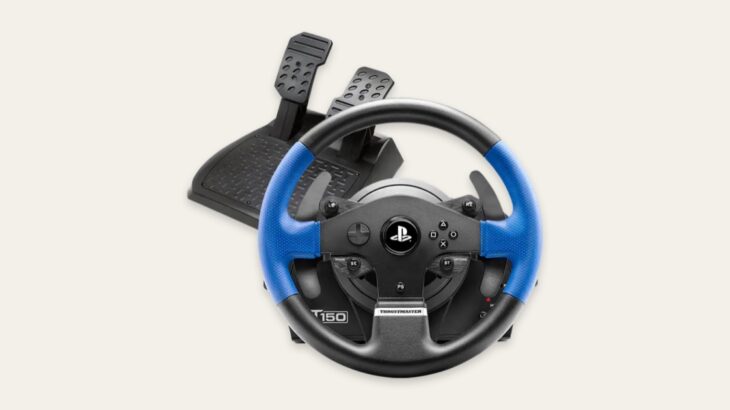
Compared with Thrustmaster's lower-tier T150, which costs around ¥32,000, I have repeatedly reached the same conclusion: if the T300RS is available in the ¥30,000 range during a sale, choose the T300RS without hesitation.
The T150 is an option for anyone who wants to experience force feedback on a tighter budget. However, the Thrustmaster T300RS discussed later can sometimes fall into the ¥30,000 range during sales. If you can get them at a similar price, I overwhelmingly recommend the T300RS.
— From Picar Channel, “Review of 9 GT7-compatible racing wheels” (T150 comparison section)
Should you consider upgrading to the T598?
Released in 2025, the T598 is a new-generation wheel that moves from the T300RS's belt drive to direct drive (DD). For existing T300RS users, it offers a realistic upgrade path.
Thrustmaster TS Series, T-GT II, and T300RS users: the T598 is a very strong option if you use a belt-drive racing wheel, particularly a T300RS, and are considering a replacement. You can upgrade to a more direct DD experience without worrying about the heat issues and aging associated with belt drives. However, note that the conversion adapter for older steering wheels was not yet available in Japan. Once you have the base and adapter, you can retain your existing pedals and shifter while immediately experiencing what DD can do.
— From Picar Channel, “Official GT7 support for the T598! Behavior testing”
In other words, the T598 is worth serious consideration for people who already own a T300RS and are looking to replace it. For a new buyer, though, the T300RS is still enough when you consider the price gap and compatibility advantages.
Who it is for—and who should look elsewhere
✅ Recommended for
- Intermediate drivers upgrading from an entry-level wheel such as the G29, T150, or HORI
- Drivers who prefer the smooth, quiet FFB of belt drive
- Anyone wanting to play iRacing, GT7, Shutokou Battle 2025, and similar titles seriously
- Drivers who want to build out an ecosystem with future additions such as wheel rims, pedals, and a shifter
- Buyers able to wait for a sale in the ¥30,000 range
❌ Not recommended for
- Anyone who puts the latest vibration effects, TRUEFORCE, first → Logitech G923
- Anyone who wants DD response in the ¥100,000 class → Fanatec DD Pro / CSL DD
- Anyone trying to minimize the total cost including a shifter and clutch pedal → Logitech G923
- Existing T300RS owners looking for their next step → consider moving to the Thrustmaster T598
Related videos
- Reviewing all 9 racing wheels compatible with Gran Turismo 7
- Shutokou Battle 2025 first play: detailed racing-wheel setup guide
- G923 vs. T300RS: in-depth comparison
- Official GT7 support for the T598! Results of my behavior testing
- G923 re-tested in Gran Turismo 7: the huge step up from the G29
Frequently asked questions
Q1. What is the difference between the T300RS and T150?
A. The T300RS normally costs around ¥50,000 and the T150 around ¥32,000, but the T300RS can sometimes fall into the ¥30,000 range during sales. The T300RS is superior in FFB strength, its three-pedal layout, and wheel-swapping capability. The conclusion in my videos is clear: if you can get them at a similar price, the T300RS is overwhelmingly recommended.
Q2. Does it work on PS5?
A. Yes. The T300RS supports PS5, PS4, and PC. It is officially supported in GT7, and I personally used a T300RS to play Shutokou Battle 2025.
Q3. Now that the T598 is out, should I avoid buying a T300RS?
A. No. The T300RS remains a strong option for new buyers. The T598 is direct drive, so the feel is substantially different, and it also costs more. The T598 is a strong upgrade option for users who already own a T300RS and are considering replacing it.
Q4. How much does a full setup with a shifter and clutch pedal cost?
A. According to my videos, a T300RS setup including a shifter costs roughly ¥80,000 to ¥90,000. An equivalent Logitech G923 setup can be assembled in the ¥60,000 range. That makes the G923 the total-cost choice, while the T300RS is the performance choice.
Q5. How different are belt drive and DD (direct drive)?
A. DD is clearly ahead in response, road-detail resolution, and torque strength. However, its price rises substantially: a CSL DD starts at around ¥47,000, while the DD Pro is around ¥100,000 to ¥120,000. The T300RS is the choice if you want a serious experience in the ¥50,000 class; the CSL DD / DD Pro is the choice if you want to get into DD in the ¥100,000 class.