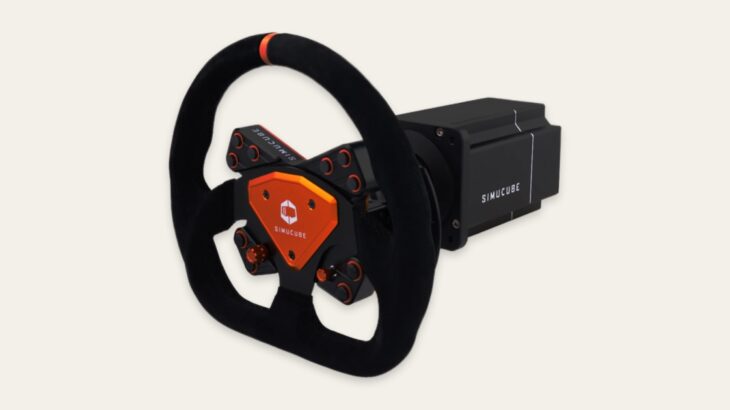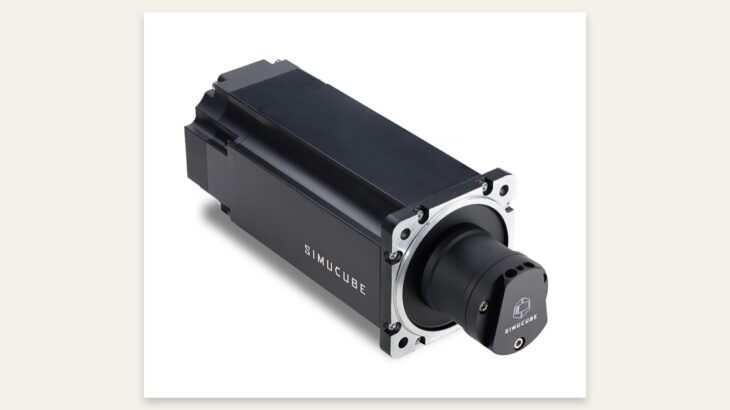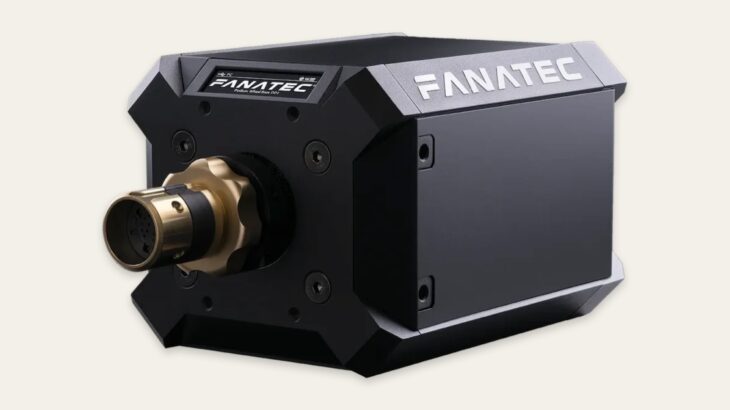
Bottom line: as of 2026, the Fanatec Podium DD1 remains a compelling choice as the ultimate PS5-compatible racing wheel. At around ¥220,000–¥230,000 for the wheel base alone, or roughly ¥270,000 for a full setup including the recommended V3 Pedals, it is expensive. But as Fanatec’s flagship, it delivers an overwhelming quality of force feedback. There is one surprising caveat, though: in my real-world testing, the Thrustmaster T-GT II was actually easier to set fast lap times with. Your buying decision starts with being clear about what you want from your setup.
In this article, I organize what I have said across 54 Picar Channel videos about the DD1—primarily for experienced users who have already spent serious time with equipment such as the DD Pro. I cover its feel, time-attack results, and where it sits relative to the DD Pro and DD2.
- 1. My verdict in 30 seconds
- 2. What is the Fanatec Podium DD1? Its flagship position
- 3. On-track impressions: the BMW wheel and its “heavy rotation”
- 4. The surprising conclusion: the T-GT II is faster for setting lap times
- 5. V3 Pedals are the standard pairing
- 6. What it feels like in use: consolidating impressions from 54 videos
- 7. Where the DD1 sits versus the DD Pro and DD2
- 8. Availability in Japan: the history of the “DD1 PS4”
- 9. Who it is—and is not—for
- 10. Related videos
- 11. Frequently asked questions
- 12. Read next
My verdict in 30 seconds
The conclusion from 54 Picar Channel video mentions is that the Fanatec Podium DD1 is a wheel for advanced users who put feel, pride of ownership, and real-car-like immersion first. It is not necessarily the best tool for setting lap times, but its ability to read what the tires are doing, its sheer torque, and the expandability of the Fanatec ecosystem keep it at the top of the PS5-compatible direct drive category.
What is the Fanatec Podium DD1? Its flagship position
The DD1 is a core model in Fanatec’s Podium line and is regarded as the ultimate PS5-compatible direct drive racing wheel.
To explore the wider range, also see the Fanatec ClubSport DD / DD+ guide: the difference between 12 N·m and 18 N·m and my Fanatec CSL DD review: is ¥47,000 enough for a PC direct drive entry point?.
Fanatec Podium DD1 (PS5-compatible): If you want the ultimate PS5-compatible racing wheel, it is the Fanatec Podium DD1. It is Fanatec’s top-tier model: a direct drive racing wheel that boasts overwhelming force feedback strength and precision. The recommended pedals are the ClubSport V3 Pedals, which are excellent load-cell pedals.
— From Picar Channel’s “Gran Turismo 7: Review of all nine compatible racing wheels”
Key specifications
| Item | Details |
|---|---|
| Brand | Fanatec |
| Series | Podium (flagship) |
| Drive system | Direct drive |
| Force feedback | 20 N·m class (well above the DD Pro’s 8 N·m) |
| Wheel base price | Approximately ¥220,000–¥230,000 |
| Full setup price | Approximately ¥270,000 (including V3 Pedals) |
| Recommended pedals | Fanatec ClubSport V3 (load cell) |
| Compatible platforms | PlayStation 5 / PlayStation 4 / PC |
On-track impressions: the BMW wheel and its “heavy rotation”
In a GT7 time-attack comparison video, I described the DD1’s distinctive feel in concrete terms.
I started driving with the Fanatec Podium DD1, using the BMW wheel. One characteristic of Fanatec’s BMW wheel is that it has “heavy rotation.” That makes quick steering inputs difficult, so it feels like you need to turn it slowly and carefully. The wheel’s moment of inertia—its tendency to keep rotating—is large, which tends to dull its response.
— From Picar Channel’s “Gran Turismo 7: The surprising result of comparing racing wheels in a fastest-lap National Sports Festival time attack”
In other words, the DD1 with the BMW rim is substantial and highly car-like, but it does not excel at nimble steering. That is the key to the difference between its feel and its time-attack result.
The surprising conclusion: the T-GT II is faster for setting lap times
In that same time-attack video, I reached a conclusion that will surprise many readers.
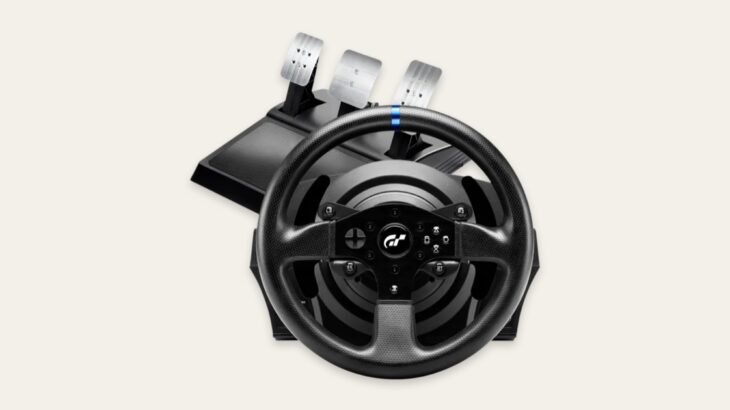
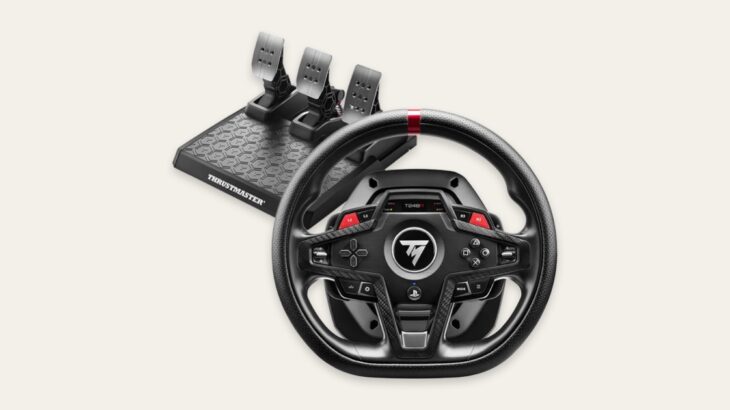
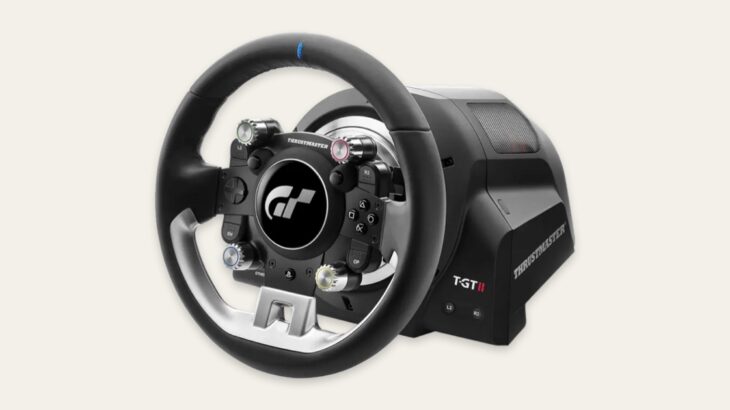
Conclusion: the Thrustmaster T-GT II has the edge when it comes to setting lap times. This comparison test led me to a very surprising conclusion: “The Thrustmaster T-GT II is easier to set a time with than the Fanatec Podium DD1.” Fanatec wins on realistic control feel and material quality, but as a human-machine interface—when the goal is to drive the car quickly—the T-GT II is superior.
— From Picar Channel’s “GT7 fastest-lap National Sports Festival time attack”
This is an important point: “ultimate” does not automatically mean “fastest.” The DD1 wins on feel and refinement, while the T-GT II is better suited to the specific goal of setting lap times. That is what my on-track test showed.
You can therefore frame the buying decision like this:
- Choose the DD1 if feel, pride of ownership, and real-car immersion come first.
- Choose the T-GT II if getting results in time attack comes first.
V3 Pedals are the standard pairing
For a complete DD1 setup, pairing it with Fanatec ClubSport V3 Pedals is recommended. My time-attack video also documents the V3 pedal setup.
Fanatec Podium DD1 + V3 Pedals: This setup pairs Fanatec’s flagship direct drive racing wheel, the Podium DD1, with high-performance V3 Pedals. For the V3 Pedals, I fitted the damper kit—a part that adjusts pedal resistance—and used the softest and medium internal elastomers together. The damper was set to its weakest setting.
— From Picar Channel’s “GT7 fastest-lap National Sports Festival time attack”
V3 Pedals use a load cell, so brake control is based on pedal force rather than pedal travel. That allows you to brake by building pressure, in a way that is closer to a real racing car.
What it feels like in use: consolidating impressions from 54 videos
“Overwhelming information” and road feedback
From the moment I gripped the DD1 and drove away, I have described it as being on a completely different level from the DD Pro and CSL DD.
The difference was immediately obvious the moment I took hold of the DD1 and started driving. Its force feedback is on a “completely different level” from the DD Pro and CSL DD. It was an experience worthy of being called world-class. The DD1’s greatest trait is its overwhelming “resolution.” Road information reaches you with the clarity of a high-definition image. If the fine stones on the road look blurred with the DD Pro, with the DD1 it is like seeing a thousand stones sharply grouped together. You can also feel the shape of curbs—the rising edges and unevenness—in a more realistic, tangible way.
— From Picar Channel’s “Comprehensive test of the latest, strongest DD Pro, CSL DD, and DD1 for PS4”
“A thousand stones sharply grouped together” is my own metaphor, and it captures the DD1’s resolution most directly. The DD Pro and CSL DD already transmit convincingly realistic road information, but the DD1 takes that precision several levels further.
What became clear when compared directly with the PS5 DualSense controller
The DD1’s exceptionally rich information was also clear in a direct comparison video with the standard PS5 DualSense controller.
I started with the Fanatec DD1 for PS4. From the instant I gripped the wheel and pressed the accelerator, its overwhelming amount of information was striking. Feedback from the road—the surface undulations, the feel of curbs, the limit of tire grip, and even the subtle behavior at the instant the car begins to slide—all comes through the wheel as if you could touch it.
— From Picar Channel’s “GT7 test: High-end racing wheel vs. PS5 controller”
Being able to feel the limit of tire grip and the minute behavior as the car starts to slide is at the heart of the DD1’s experiential value. That is territory the DualSense’s haptic feedback cannot reach.
The difference in fine detail versus the T300RS
One unexpected finding is that, in certain conditions, the T300RS can seem to have the edge in the fineness of the information it communicates.
Understeer is easy to understand too, but in terms of the fine detail in the force feedback, I felt that the T300RS was superior. Fanatec provides solid feedback from the rough road texture and when the car bounces, but compared with the T300RS, there are moments when the road surface undulations feel slightly more broad-brush. This is not about one being better or worse; it is a difference in the characteristics of each racing wheel. Fanatec excels in operating feel and rigidity, while my impression is that the T300RS is a step ahead in force-feedback finesse. It is also possible that the heavy BMW wheel I used was absorbing some of that fine feedback.
— From Picar Channel’s “DD1 vs. T300RS information comparison”
The possibility that the heavy BMW wheel absorbs fine feedback shows how much rim choice affects the DD1’s feel. A heavy rim brings stability, but it can also absorb subtle vibrations.
Changing the wheel rim changes the feel dramatically
Another DD1 characteristic is how strongly rim changes affect its operation.
In the world of racing simulators, pursuing a realistic driving experience is crucial. The racing wheel sits at the core of that experience, but did you know that the type of steering wheel rim you fit can dramatically change the way it feels—not just the wheel base itself? This time, in the popular racing simulation Assetto Corsa Competizione (ACC), I thoroughly tested the operating feel and differences in how force feedback is transmitted by fitting various wheels to Fanatec’s DD1 PS4-compatible version.
— From Picar Channel’s “Testing DD1 feel by changing wheel rims”
So the DD1 is not a product you simply buy as a base and call finished. It needs to be evaluated as a complete configuration that includes your steering wheel rim choice. This is where the breadth of the Fanatec ecosystem—BMW, Porsche, Ferrari, Formula-style rims, and more—comes into its own.
Where the DD1 sits versus the DD Pro and DD2
Fanatec’s direct drive lineup can be organized by price and intended use as follows.
| Model | Wheel base price | Platform support | Peak torque | Positioning |
|---|---|---|---|---|
| CSL DD | Approximately ¥47,000 | PC only | 5 N·m / 8 N·m | Entry-level PC direct drive |
| DD Pro | Approximately ¥90,000–¥120,000 | PS5 / PS4 / PC | 8 N·m | Entry-level PS5-compatible direct drive (standard model) |
| DD1 (PS5-compatible) | Approximately ¥220,000–¥230,000 | PS5 / PS4 / PC | 20 N·m | The ultimate PS5-compatible option |
| DD2 | More than approximately ¥200,000 | PC only | 25 N·m | The ultimate PC-only option |
On the difference between the DD1 and DD Pro, I said the following in a comparison video.
The DD1 clearly has higher performance than the DD Pro and CSL DD. There genuinely is value in this flagship model that justifies the price difference. Its ability to understand what the tires are doing is also outstanding. The instant grip falls away, and the rubber-like sensation as grip returns, come through with greater realism. It is also extremely easy to understand the feeling of the tires progressively deforming. You can tell, as if it were in your hands, exactly what state the tires are in.
— From Picar Channel’s “Comprehensive test of the latest, strongest DD Pro, CSL DD, and DD1 for PS4”
The feeling of the tires deforming and that rubber-like realism are higher-end levels of resolution beyond the DD Pro experience. For users serious about reading the tire at the limit, that price gap is worth paying.
Availability in Japan: the history of the “DD1 PS4”
Fanatec’s PlayStation-compatible direct drive products have had a complicated history in the Japanese market.
Because of the previous DD1 situation, I have received many inquiries asking where it can be purchased. I have strongly appealed to the companies involved for an official Japanese release. …Japan has many Gran Turismo players, and connecting through a PC or a conversion adapter is simply too much trouble for ordinary users. Being able to connect easily and start playing right away is important for a product.
— From Picar Channel’s “The dark side of racing wheels: choosing a racing wheel in 2023”
In other words, official distribution of the DD1 PS4 / PS5-compatible version in Japan has been inconsistent, and there were periods when personal import was necessary. Check the latest inventory situation through Fanatec’s official website and authorized retailers before buying.
Who it is—and is not—for
✅ Recommended for
- People who have already used the DD Pro or CSL DD extensively and want to experience the refinement of a higher-end model
- People who want the very best for both PS5 and PC
- Advanced drivers who drive by reading the tires at the limit
- Business owners or enthusiasts with effectively no upper budget limit for their sim-racing equipment
- People who already own, or plan to buy, official Fanatec rims from BMW, Porsche, Ferrari, and similar brands
❌ Not recommended for
- People who prioritize time-attack results above all else → Thrustmaster T-GT II / Logicool G PRO Racing Wheel
- People looking for their first direct drive racing wheel → DD Pro (¥100,000–¥120,000) or CSL DD (PC only)
- People who prefer nimble handling → the DD1 + BMW rim has high inertia
- PC-only users with a similar budget → the DD2 (25 N·m) is where the full potential lies
Related videos
- Gran Turismo 7: Review of all nine compatible racing wheels
- Gran Turismo 7: The surprising result of comparing racing wheels in a fastest-lap National Sports Festival time attack
- The ultimate PS4/PS5 racing-wheel showdown: DD Pro vs. DD1
- Comprehensive test of the latest, strongest DD Pro, CSL DD, and DD1 for PS4
- The dark side of racing wheels: choosing a racing wheel in 2023
Frequently asked questions
Q1. How large is the difference in feel between the DD1 and DD Pro?
A. In my videos, I described the DD1’s ability to understand tire condition as outstanding, with a higher level of rubber-like realism at the moments grip falls away and returns. The price difference is approximately ¥100,000–¥130,000, but for advanced users, I found that this flagship genuinely offers value commensurate with the gap.
Q2. Why is the T-GT II easier to set a lap time with?
A. The DD1 + BMW rim has a large moment of inertia and produces “heavy rotation,” making quick steering inputs more difficult. The T-GT II, by contrast, has a more nimble operating feel that makes it easier to string together fast laps. My conclusion was that the T-GT II has the edge in ease of use as a human-machine interface.
Q3. What peripherals are needed to use it on PS5?
A. In addition to the wheel base, you need to fit a PlayStation-compatible steering wheel rim. You can choose from official Fanatec rims from BMW, Porsche, Ferrari, and others. V3 Pedals are recommended, but CSL Pedals can also be used.
Q4. Is the DD2 a better option for PC-only use?
A. Yes. If you are PC-only and have an equivalent or greater budget, the DD2 with 25 N·m peak torque is the ultimate option. The DD1 is the leading choice when you also want to use PS5.
Q5. Can I buy it officially in Japan?
A. It depends on the period. My videos cover the history of the DD1 PS4-compatible version not being officially sold in Japan and requiring personal import, but check Fanatec’s official site and Japanese retailer inventory for the latest situation.