Bottom line: the Thrustmaster T248 is an excellent product in isolation, but its pricing is the biggest issue. At around ¥55,000, it sits between the T300RS (around ¥50,000, or in the ¥30,000 range on sale) and the Fanatec CSL DD Pro (from around ¥90,000, a PS5-compatible direct-drive wheel). Its expertly tuned force feedback, pedals improved over the T300RS, and built-in display are genuinely distinctive strengths. But if you can stretch your budget a little further, the direct-drive CSL DD Pro comes into view—and that is the deciding factor in this purchase.
In this article, I’ll consolidate what I’ve covered across 29 Picar Channel videos on the T248. It is primarily aimed at intermediate drivers considering an upgrade from a T150, G29, or G923, covering its FFB character, pedal improvements, and the central question of its pricing.
- 1. My verdict in 30 seconds
- 2. What is the Thrustmaster T248? A natural evolution of the T300RS
- 3. Testing in iRacing: Mode 3 was my clear favorite
- 4. Real-world feel: what I found across 29 videos
- 5. Where it sits against the competition
- 6. Who it suits—and who should look elsewhere
- 7. Related videos
- 8. Frequently asked questions
- 9. Read next
My verdict in 30 seconds
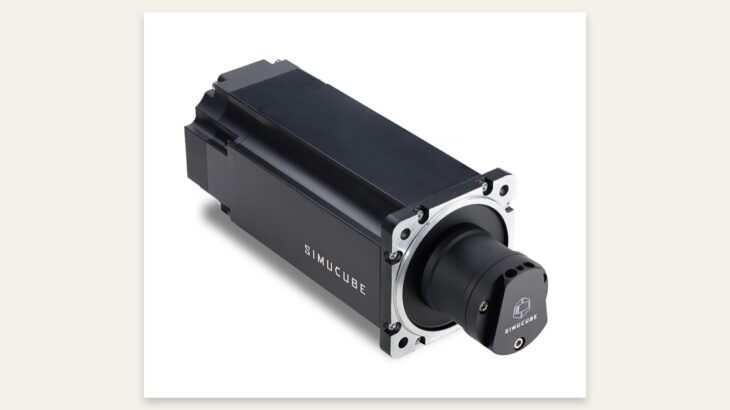
My conclusion from 29 videos of Picar Channel coverage is that the Thrustmaster T248 is definitely a good wheel on its own merits, but one whose pricing is always difficult to ignore. Its FFB tuning, improved pedals, and display help justify its roughly ¥55,000 price. Yet the CSL DD (around ¥47,000, PC-only) and CSL DD Pro (around ¥90,000, PS5-compatible direct drive) are immediately visible alternatives, which makes the decision harder. It is a strong candidate if you want a clear step up from a T150 or G29. But if you can add a little more to the budget, making the jump straight to direct drive is worth considering.
What is the Thrustmaster T248? A natural evolution of the T300RS
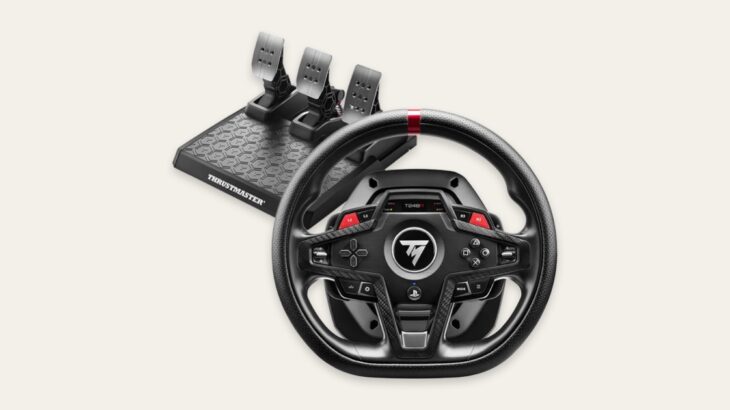
The T248 is Thrustmaster’s entry in the mid-range market, positioned as a successor of sorts to the T300RS. I bought one with my own money and reviewed it.
To explore the wider range of choices, also see my complete comparison of PS5-compatible direct-drive wheels: choosing between the DD Pro, DD Extreme, and G PRO Racing Wheel and my Thrustmaster T598 review: full testing across seven videos of its DD drive, high-frequency vibration, official GT7 support, and T300RS compatibility.
Hey, Konchakkya! This time, I’m giving Thrustmaster’s new T248 wheel—which I bought with my own money—a fully honest, no-sponsor review. This wasn’t supplied by the manufacturer; I paid for it myself, and that is exactly why I want to share my candid impressions. When you think Thrustmaster, you think of the classic T300RS. It is a truly great product, and it would not be an exaggeration to say that it earned a place in sim-racing wheel history. But the market has changed dramatically now that direct-drive wheels such as Fanatec’s CSL DD Pro have arrived below the ¥100,000 mark.
— From Picar Channel, “No-sponsor T248 review—I bought it myself, and honestly, it’s expensive!”
Key specifications
| Item | Details |
|---|---|
| Brand | Thrustmaster |
| Series | T248 (mid-range) |
| Drive system | Hybrid system (belt + gears) |
| Wheel price | Approx. ¥55,000 |
| Included pedals | Three pedals (including clutch) / upgraded spring-and-rubber construction |
| Display | Built into the steering wheel (speed and gear display) |
| FFB modes | Multiple selectable modes (Modes 1–3) |
| Compatible platforms | PlayStation 5 / PlayStation 4 / PC |
Testing in iRacing: Mode 3 was my clear favorite
One defining T248 feature is the ability to switch between several FFB modes. After trying each mode in iRacing, I developed a very clear preference.
Putting the Thrustmaster T248 through its paces in iRacing! I connected the T248 to my PC and launched iRacing straight away. First, I tried the force-feedback settings—the system that reproduces road conditions and vehicle behavior through the wheel. The T248 has several modes that adjust FFB strength and character. I began with Mode 1. Once I started driving, what first surprised me was how good the clutch and bite-point feel was. It was very easy to operate, with a level of control that felt close to a real car. The brake felt good as well, offering solid resistance from the initial part of the pedal travel.
— From Picar Channel, “No-sponsor: What happened when I used the T248 in iRacing!”
But in Mode 1, the initial FFB weight felt a little too light. So I switched to Mode 2. That added a suitable amount of initial weight and gave me a more stable steering feel. I then tried Mode 3 as well. It also had more weight, and I found the weight particularly easy to read when turning in while releasing the brakes. It made the car’s behavior easier to understand. In the end, Mode 3 was my personal favorite. Understeer—when the car pushes wide through a corner—was extremely easy to identify, and road information came through directly. I felt it was ideal for driving in iRacing.
— From the same video
“Mode 3 makes understeer easy to understand” is valuable praise in an entry-to-mid-level wheel. The flexibility to choose the mode that suits you is a T248-specific strength.
Real-world feel: what I found across 29 videos
Outstanding FFB tuning
The T248 cannot match Fanatec direct-drive hardware on raw hardware specifications, but this is where Thrustmaster’s long-developed FFB tuning comes into its own.
Now, onto force feedback, Thrustmaster products’ greatest strength. Looking only at hardware specifications, they may fall behind direct-drive systems like Fanatec’s. But Thrustmaster is exceptionally good at force-feedback programming—in other words, its tuning. It has extensive know-how in translating in-game information into something that feels realistic and, just as importantly, is easy for the driver to understand. The T300RS had that quality, and the T248 retains this skill for tuning. It recreates a feel close to the real thing. I would call that the product of technology Thrustmaster has developed over many years.
— From Picar Channel, “No-sponsor T248 review—I bought it myself”
“Inferior hardware specs, but better tuning” is an important perspective when assessing entry-level wheels. The T248’s strength is its design focus on communicating tire condition and the limit of cornering grip in an understandable way.
Pedals that are a definite improvement over the T300RS
A less obvious T248 strength is its revised pedal construction. It is a clear step forward from the pedals supplied with the previous T300RS.
The pedal set’s evolution is one of the T248’s hidden strengths. Let’s compare the T248 pedals with the pedals included with the T300RS. The brake pedal is particularly noteworthy. The T300RS pedal created resistance by compressing rubber, whereas the T248 brake pedal combines a spring and rubber. As you press it, the spring works first; farther into the travel, the rubber compresses. This produces a more progressive and realistic feel. I felt this was a very good improvement. It also comes with a replacement spring as standard, which I appreciate because it lets you tune the feel to your preference.
— From the same video
That progressive pedal action—where the spring works first and the rubber comes in deeper into the stroke—is impressive for a wheel in the ¥50,000 range. The included replacement spring to adjust stiffness also adds value if you intend to use it for a long time.
The T248 brake pedal has a spring-and-rubber structure inside. When I actually pressed it, the rubber sensation was not especially pronounced, but the spring’s appropriate rebound force and the available pedal travel stood out. In a simulator such as iRacing, that spring rate makes it unexpectedly easy to use. Generally speaking, a short-travel, firm load-cell brake is considered best for reproducing real-car-like linear braking force. But in iRacing, some drivers may find that a potentiometer pedal with a reasonable amount of travel, like the T248’s, is easier to operate with the familiar feel of a controller—and may even allow them to set faster times.
— From Picar Channel, “No-sponsor: What happened when I used the T248 in iRacing!”
The point that “load cell is not necessarily optimal” follows the same line of thought as my T-GT II article. Depending on the simulator, a potentiometer pedal with a certain amount of travel may be the easier route to faster laps.
Display and expanded controls: greater convenience than the T300RS
The T248’s unique feature is the display built into the steering wheel. It is quietly very useful.
Let’s look at the steering wheel’s button layout, too. The T248 has substantially more buttons than the T300RS. In addition to the PS, Share, and Options buttons, it has L3/R3 buttons, a GS button, up/down buttons linked to the display, and a D-pad. In particular, the L3/R3 buttons and display—neither of which were on the T300RS—are significant improvements. The display shows information such as speed and gear, improving convenience in-game. There are two paddle shifters on the rear, and they feel good to use. It also has analogue sticks and a rotary encoder, allowing you to assign a range of functions.
— From Picar Channel, “No-sponsor T248 review—I bought it myself”
Being able to check speed and gear on the wheel itself minimizes eye movement. It is particularly practical in VR.
“It isn’t bad, but the CSL DD Pro is in sight”: the price question
The biggest issue surrounding the T248 is the CSL DD Pro, a PS5-compatible direct-drive wheel that becomes available if you add a little more to the budget.
For example, if you add a little more to your budget, you can buy a higher-performance direct-drive wheel such as Fanatec’s CSL DD Pro for around ¥90,000. With the T248 at ¥55,000, it ends up feeling expensive even after accounting for the gap to the ¥90,000 CSL DD Pro. I feel that this is less an issue of distributors and more an issue with the manufacturer’s pricing for the Japanese market. Fanatec is one manufacturer that offers its products at broadly similar prices around the world, and I can only hope Thrustmaster will provide products at more competitive prices in Japan as well.
— From Picar Channel, “No-sponsor: What happened when I used the T248 in iRacing!”
The fair assessment that “it is a good product, but its pricing feels expensive” cannot be left out of a T248 discussion. The fact that the CSL DD (¥47,000, PC-only) and CSL DD Pro (¥90,000, PS5-compatible) come within reach at a similar or moderately higher spend is its greatest competitive problem.
Realistic tire grip and road feel in iRacing
Separate from that pricing criticism, the T248 delivers a good iRacing driving experience in its own right.
Conclusion: Is the Thrustmaster T248 worth buying? The T248 performs extremely well as a product. Its force-feedback tuning is especially outstanding: road grip and vehicle behavior come through realistically, increasing both immersion and control precision in iRacing. The brake pedal’s suitable spring rebound and pedal travel also work well in a simulator, and I rate it highly.
— From the same video
Where it sits against the competition
| Product | Price | Drive system | Pedals | Positioning |
|---|---|---|---|---|
| T150 | Approx. ¥32,000 | Belt | Two pedals | Entry-level FFB |
| G29 | From approx. ¥40,000 | Gear-driven | Three pedals + shifter bundle | Established entry-level choice |
| G923 | Approx. ¥50,000 | Hybrid + TRUEFORCE | Three pedals | G29 successor with enhanced vibration effects |
| T248 | Approx. ¥55,000 | Hybrid | Three pedals + display | The focus of this article |
| T300RS | Approx. ¥50,000 (¥30,000 range on sale) | Belt-driven | Three pedals | The standard ¥50,000-range wheel |
| CSL DD (PC-only) | From approx. ¥47,000 | Direct drive | Sold separately | Entry point to DD for PC drivers |
| CSL DD Pro | From approx. ¥90,000 | Direct drive | Sold separately | Entry point to PS5-compatible DD |
The T248 is unquestionably more feature-rich than the T300RS, but it is caught between the T300RS when it drops to the ¥30,000 range on sale and the ¥47,000-and-up, PC-only CSL DD.
Who it suits—and who should look elsewhere
✅ Recommended for
- Drivers wanting a definite FFB upgrade from a T150 or G29
- Drivers who want to find their preferred feel through iRacing’s multiple FFB modes
- Anyone who values an on-wheel display for speed and gear information
- Drivers dissatisfied with the T300RS pedals and interested in the upgraded spring-and-rubber setup
- Those who trust Thrustmaster’s heritage of expertly tuned FFB
- Drivers who want compatibility with both PS5 and PC but do not want to spend CSL DD Pro money
❌ Not recommended for
- Anyone seeking a direct-drive wheel for the same budget → CSL DD (PC-only) or CSL DD Pro (PS5-compatible)
- Anyone able to buy a T300RS on sale in the ¥30,000 range → the T300RS can offer better value
- Dedicated iRacing drivers whose absolute priority is a load-cell brake → CSL Pedals LC or Heusinkveld options
- Drivers who must have an H-pattern shifter while keeping total cost down → G29 / G923 shifter bundle (¥60,000)
Related videos
- No-sponsor: What happened when I used the T248 in iRacing!
- No-sponsor T248 review—I bought it myself, and honestly, it’s expensive!
- New DDPRO wheel review roundup (including a price comparison with the CSL DD)
- The dark side of sim-racing wheels: choosing a wheel in 2023!
Frequently asked questions
Q1. Should I choose the T248 or T300RS?
A. If the T300RS is available in the ¥30,000 range on sale, it is a strong option. At their regular prices, the T248 is the newer-generation wheel, with improved pedals, a display, and selectable FFB modes.
Q2. What is the difference between the T248 and CSL DD Pro?
A. Their drive systems are fundamentally different. The T248 is hybrid belt-and-gear driven; the CSL DD Pro is direct drive. The price difference is around ¥35,000, but the CSL DD Pro is substantially ahead in the underlying quality of its steering feel. If you can spend a little more, jumping to the CSL DD Pro has real value.
Q3. Which mode do you recommend for iRacing?
A. Based on my personal feel, Mode 3 was my favorite. The steering weight during corner entry was easy to read, and it made understeer easier to recognize. Preferences differ, though, so I recommend trying Modes 1 through 3 in order after purchase.
Q4. Do I have to replace the included pedals?
A. No. They improve on the T300RS with their spring-and-rubber construction, and they are entirely usable for iRacing. If you eventually want to move to a load-cell setup, options include the CSL Pedals LC (around ¥40,000) and Heusinkveld Sprint (around ¥70,000).
Q5. Is the display genuinely useful?
A. It lets you check speed and gear at your hands, making it useful particularly in VR or in any setup where you want to minimize eye movement. More real racing cars now use similar displays, so it also adds to immersion.