- 1. My verdict in 30 seconds
- 2. The most immediate takeaway: true DD smoothness
- 3. Its real character is in how it uses vibration
- 4. ACC shows both its strengths and its limits
- 5. When the settings are right, it transforms
- 6. Versus the T300 and T-GT II: a new kind of realism
- 7. Who it suits
- 8. Who it does not suit
- 9. Conclusion
- 10. Read next
My verdict in 30 seconds
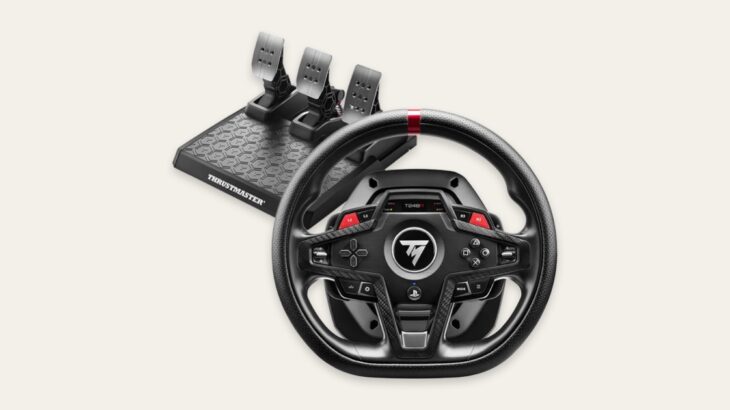
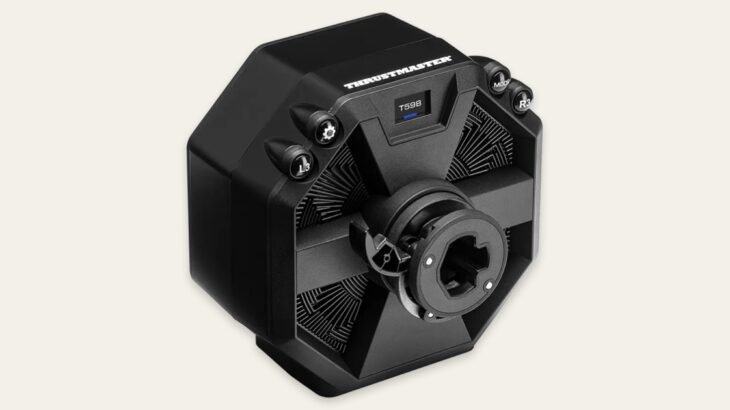
In the context of this channel, the Thrustmaster T598 is more than just an “affordable DD” wheel. Its torque figure alone may look modest, but that is not what determines my real-world assessment. What stands out strongly across my videos is its smooth initial movement, minimal friction, fast torque response, and vibration detail—including high-frequency effects. In other words, the T598 is not a wheel that relies on sheer weight; it is a wheel that competes on how it feeds information back to your hands.
That said, I am not praising it unconditionally. In a racing-car context such as ACC, there are situations where I want more torque, and the videos clearly show that in-game settings can change the impression dramatically. On the other hand, when the settings click—or when viewed through the lens of road cars—it has a very fresh kind of realism. So, the T598 is a new-generation wheel that does not reveal itself on a spec sheet, but can really hit the mark when it suits the way you use it.
If you want to explore the alternatives more broadly, also see my Thrustmaster T-GT II Review: The Ultimate Belt-Drive Wheel That Is Faster Than the DD1 in GT7 and Assetto Corsa EVO Review: Tire Model, GT7 Comparison, and PS5 Potential.
The most immediate takeaway: true DD smoothness
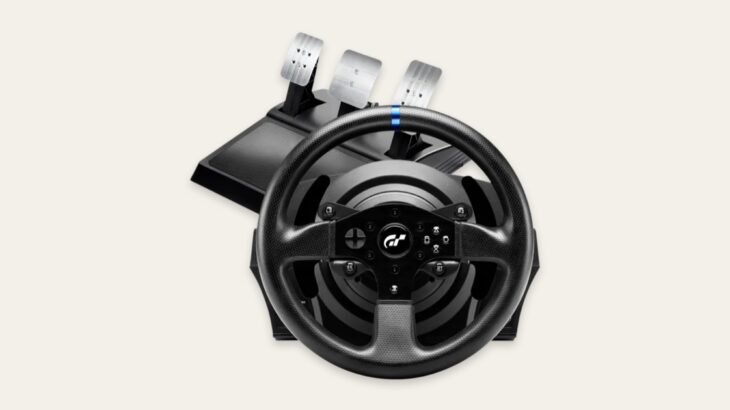
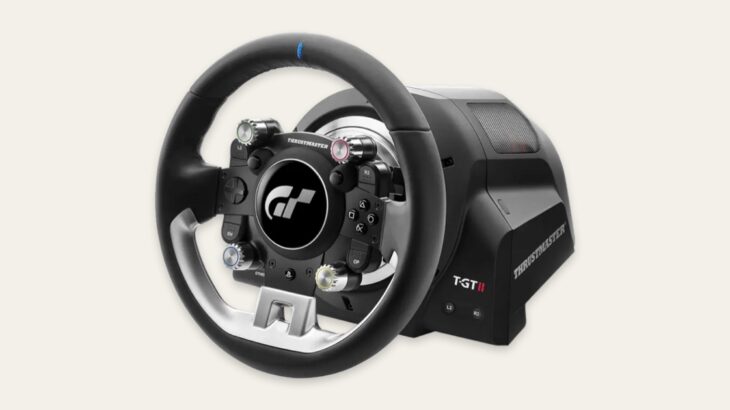
The first thing that stands out in my T598 videos is how naturally it starts moving. The graininess and slight friction you can feel from conventional belt-driven wheels such as the T300 and T-GT II are greatly reduced, and I rated that free-flowing feel from the very first turn of the wheel highly.
On this channel, I described the T598 as having “no sense of friction” and “an incredibly smooth initial movement.” That is the first clear difference from the previous generation. It is not dramatically heavy, but its transitions and on-center response are sorted enough that you immediately understand you have moved to DD. The T598 is the kind of wheel whose difference comes through in the first rotation.
The evolution around the quick-release system is quietly significant, too. Compared with older Thrustmaster wheels, changing rims takes less effort, making day-to-day use much more modern. This also makes the T598 feel less like a basic budget model and more like part of a product that updates the entire Thrustmaster lineup.
Its real character is in how it uses vibration
The biggest point separating the T598 from other racing wheels is not torque alone, but how it returns information—including vibration. On this channel, I see the T598 as a “next-generation DD”: rather than creating a real-car sensation solely through weight, as conventional wheels do, its value lies in how it conveys the fine vibrations and road texture of a modern car with power steering.
This is the particularly interesting part. While high-end wheels of the past reproduced a heavy racing car without power steering through large steering forces, the T598 is trying to create the fine information that is always present at the wheel of a modern car. That is why 5 Nm can look insufficient on paper, yet the amount of information changes the impression once you drive with it.
This approach works particularly well in GT7 and in road-car-oriented driving. Road imperfections, the lightness when the car lifts over a curb, and the random roughness that comes back through the wheel under sustained load all feel less like simple buzzing and more like “calculated vibration.”
ACC shows both its strengths and its limits
One interesting aspect of the T598 is that its evaluation changes with the game. In my ACC testing, its responsiveness, natural self-steering, and clear understeer cues all made a very good impression. It changes direction quickly from side to side and does not feel lazy around center, so I can absolutely understand why it feels like a next-generation wheel.
At the same time, with racing cars, I also clearly found myself wanting more torque. It is sufficient for road cars, but with a car such as a Porsche, I want another level of force pushing back at me. That is a limitation of the T598 that cannot be ignored.
So, the T598 is not a wheel that simply overpowers everything. It is closer to a wheel where you work through the settings to find the sweet spot for each car and each game’s particular character.
When the settings are right, it transforms
One very important point from my T598 videos is how dramatically settings alter the experience. This was especially clear in Assetto Corsa EVO, where my assessment jumped sharply after applying the officially recommended settings. My reactions there were: “This is really good,” “It feels like I’m actually driving,” and “The onset of tire slip feels natural.”
What this tells me is that the T598 has strong hardware potential, but software-side tuning matters a great deal. With shallow settings, its lightness or lack of force stands out first; when the settings click, the realism—including its vibration detail—comes strongly to the foreground. The difference is substantial.
That is why it is risky to judge the T598 on its default settings alone. Conversely, if you have no interest in adjusting settings, there is a possibility that you will not experience even half of what makes this wheel interesting.
Versus the T300 and T-GT II: a new kind of realism
The T598 takes a noticeably different direction from Thrustmaster’s conventional wheels. The T300 was often discussed in terms of smoothness and ease of use, and the T-GT II for its refinement in GT7. The T598, by contrast, is defined by the amount of information it delivers—including high-frequency detail—and the fast initial response associated with DD.
For people who like the belt-driven graininess of the T-GT II or the feel of older rigs, the T598 may feel a little too light and clean. But its texture is clearly a step above the G923, and although it does not have the headroom of the G Pro, the way it constructs the information returned to your palms feels genuinely new. So, rather than viewing it as an extension of the older wheels, it makes more sense to see the T598 as Thrustmaster’s own answer to what comes next.
Who it suits
The T598 is best suited to people who want to experience DD’s initial response and smoothness at as realistic a price as possible. It is especially well suited to drivers who prioritize information and natural feel over weight in GT7 and road-car-oriented sims.
It also suits people who do not mind dialing in settings. The T598 tends to show its true value when the settings are right, so there is enjoyment in refining it while checking official recommendations and in-game adjustments.
Who it does not suit
Conversely, it is not ideal for drivers who simply want strong torque and a heavy racing-car feel. For that use, the T598 may feel light.
It may also be a mixed fit for people who want a fully finished answer straight out of the box. The T598 is a potential-driven product; it is not a wheel that automatically reveals all of its strengths.
Conclusion
On this channel, the Thrustmaster T598 cannot be reduced to merely an “ultra-affordable DD” or an “entry-level DD.” I see it instead as a wheel taking a new approach to building real-car feel, including vibration as part of that experience. Its free-flowing initial movement, fine road detail, and the way it communicates curbs and moments of lightness have an appeal that is quite different from conventional wheels.
At the same time, its lack of torque in racing cars and its strong dependence on settings remain clear. The T598 is therefore not an obvious, universally best wheel, but a very interesting new-generation model for the right driver. Taking into account its natural feel in GT7 and road-car driving, as well as how much it improves after setup, I think it has the potential to shift the benchmark a little going forward.